
16.2. 感情分析: 再帰型ニューラルネットワークの使用
単語類似度や類推のタスクと同様に、 感情分析にも事前学習済みの単語ベクトルを適用できる。 16.1 章 の IMDb レビューデータセットは それほど大きくないため、 大規模コーパスで事前学習された テキスト表現を用いることで、 モデルの過学習を抑えられる可能性がある。 図 16.2.1 に示す具体例では、 各トークンを 事前学習済みの GloVe モデルで表現し、 それらのトークン表現を 多層双方向 RNN に入力して テキスト系列表現を得る。 その表現は 感情分析の出力へと変換される (Maas et al., 2011)。 同じ下流アプリケーションに対して、 後ほど別のアーキテクチャ上の 選択肢も検討する。
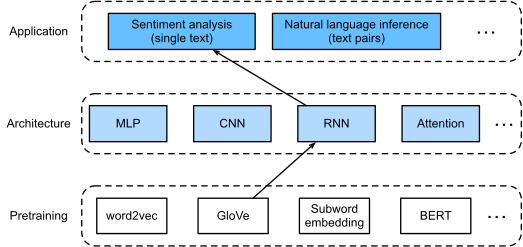
図 16.2.1 この節では、事前学習済み GloVe を RNN ベースの感情分析アーキテクチャに入力する。
from d2l import torch as d2l
import torch
from torch import nn

batch_size = 64
train_iter, test_iter, vocab = d2l.load_data_imdb(batch_size)
from d2l import mxnet as d2l
from mxnet import gluon, init, np, npx
from mxnet.gluon import nn, rnn
npx.set_np()

batch_size = 64
train_iter, test_iter, vocab = d2l.load_data_imdb(batch_size)
Downloading ../data/aclImdb_v1.tar.gz from http://d2l-data.s3-accelerate.amazonaws.com/aclImdb_v1.tar.gz...
[07:03:42] ../src/storage/storage.cc:196: Using Pooled (Naive) StorageManager for CPU
embed_size, num_hiddens, num_layers, devices = 100, 100, 2, d2l.try_all_gpus()
net = BiRNN(len(vocab), embed_size, num_hiddens, num_layers)
embed_size, num_hiddens, num_layers, devices = 100, 100, 2, d2l.try_all_gpus()
net = BiRNN(len(vocab), embed_size, num_hiddens, num_layers)
16.2.1. RNN による単一テキストの表現
感情分析のようなテキスト分類タスクでは、 可変長のテキスト系列を
固定長のカテゴリへ変換する。 以下の BiRNN クラスでは、
テキスト系列の各トークンが 埋め込み層 (self.embedding) を通じて
個別の事前学習済み GloVe 表現を得るが、 系列全体は双方向 RNN
(self.encoder) によって符号化される。 より具体的には、 双方向 LSTM
の (最終層における) 最初と最後の時間ステップでの隠れ状態を連結し、
テキスト系列の表現とする。 この単一のテキスト表現は、 全結合層
(self.decoder) によって 2 つの出力(“positive” と “negative”)を持つ
出力カテゴリへ変換される。
class BiRNN(nn.Module):
    def __init__(self, vocab_size, embed_size, num_hiddens,
                 num_layers, **kwargs):
        super(BiRNN, self).__init__(**kwargs)
        self.embedding = nn.Embedding(vocab_size, embed_size)
        # `bidirectional` を True に設定すると双方向 RNN になる
        self.encoder = nn.LSTM(embed_size, num_hiddens, num_layers=num_layers,
                                bidirectional=True)
        self.decoder = nn.Linear(4 * num_hiddens, 2)

    def forward(self, inputs):
        # `inputs` の形状は(バッチサイズ、時系列のステップ数)である。なぜなら
        # LSTMは入力の第1次元を時間軸とすることを要する
        # 次元であり、トークンを取得する前に入力を転置する
        # 表現。出力の形状は(時間ステップ数,バッチサイズ,
        # 単語ベクトルの次元)
        embeddings = self.embedding(inputs.T)
        self.encoder.flatten_parameters()
        # 最後の隠れ層の各時刻における隠れ状態を返す
        # 時系列ステップ数。`outputs` の形状は(時系列ステップ数,バッチサイズ,)である
        # 2 * no. of hidden units)
        outputs, _ = self.encoder(embeddings)
        # 初期時刻と最終時刻の隠れ状態を連結する。
        # 全結合層の入力。その形状は (バッチサイズ,
        # 4 * no. of hidden units)
        encoding = torch.cat((outputs[0], outputs[-1]), dim=1)
        outs = self.decoder(encoding)
        return outs
class BiRNN(nn.Block):
    def __init__(self, vocab_size, embed_size, num_hiddens,
                 num_layers, **kwargs):
        super(BiRNN, self).__init__(**kwargs)
        self.embedding = nn.Embedding(vocab_size, embed_size)
        # `bidirectional` を True に設定すると双方向 RNN になる
        self.encoder = rnn.LSTM(num_hiddens, num_layers=num_layers,
                                bidirectional=True, input_size=embed_size)
        self.decoder = nn.Dense(2)

    def forward(self, inputs):
        # `inputs` の形状は(バッチサイズ、時系列のステップ数)である。なぜなら
        # LSTMは入力の第1次元を時間軸とすることを要する
        # 次元であり、トークンを取得する前に入力を転置する
        # 表現。出力の形状は(時間ステップ数,バッチサイズ,
        # 単語ベクトルの次元)
        embeddings = self.embedding(inputs.T)
        # 最後の隠れ層の各時刻における隠れ状態を返す
        # 時系列ステップ数。`outputs` の形状は(時系列ステップ数,バッチサイズ,)である
        # 2 * no. of hidden units)
        outputs = self.encoder(embeddings)
        # 初期時刻と最終時刻の隠れ状態を連結する。
        # 全結合層の入力。その形状は (バッチサイズ,
        # 4 * no. of hidden units)
        encoding = np.concatenate((outputs[0], outputs[-1]), axis=1)
        outs = self.decoder(encoding)
        return outs
glove_embedding = d2l.TokenEmbedding('glove.6b.100d')
glove_embedding = d2l.TokenEmbedding('glove.6b.100d')
感情分析のために単一テキストを表現する双方向 RNN を、2 層の隠れ層で構成してみよう。
embed_size, num_hiddens, num_layers, devices = 100, 100, 2, d2l.try_all_gpus()
net = BiRNN(len(vocab), embed_size, num_hiddens, num_layers)
embed_size, num_hiddens, num_layers, devices = 100, 100, 2, d2l.try_all_gpus()
net = BiRNN(len(vocab), embed_size, num_hiddens, num_layers)
embeds = glove_embedding[vocab.idx_to_token]
embeds.shape
embeds = glove_embedding[vocab.idx_to_token]
embeds.shape
def init_weights(module):
    if type(module) == nn.Linear:
        nn.init.xavier_uniform_(module.weight)
    if type(module) == nn.LSTM:
        for param in module._flat_weights_names:
            if "weight" in param:
                nn.init.xavier_uniform_(module._parameters[param])
net.apply(init_weights);
net.initialize(init.Xavier(), ctx=devices)
[07:03:48] ../src/storage/storage.cc:196: Using Pooled (Naive) StorageManager for GPU
[07:03:48] ../src/storage/storage.cc:196: Using Pooled (Naive) StorageManager for GPU
predict_sentiment(net, vocab, 'this movie is so great')
predict_sentiment(net, vocab, 'this movie is so great')
16.2.2. 事前学習済み単語ベクトルの読み込み
以下では、語彙内のトークンに対応する 事前学習済みの 100
次元(embed_size と一致している必要がある)の GloVe
埋め込みを読み込みる。
glove_embedding = d2l.TokenEmbedding('glove.6b.100d')
glove_embedding = d2l.TokenEmbedding('glove.6b.100d')
Downloading ../data/glove.6B.100d.zip from http://d2l-data.s3-accelerate.amazonaws.com/glove.6B.100d.zip...
predict_sentiment(net, vocab, 'this movie is so bad')
predict_sentiment(net, vocab, 'this movie is so bad')
語彙内のすべてのトークンに対する ベクトルの形状を表示す。
embeds = glove_embedding[vocab.idx_to_token]
embeds.shape
torch.Size([49346, 100])
これらの事前学習済み 単語ベクトルを用いて レビュー中のトークンを表現し、 学習中にこれらのベクトルは更新しない。
net.embedding.weight.data.copy_(embeds)
net.embedding.weight.requires_grad = False
net.embedding.weight.set_data(embeds)
net.embedding.collect_params().setattr('grad_req', 'null')
16.2.3. モデルの学習と評価
これで、感情分析のために双方向 RNN を学習できる。
lr, num_epochs = 0.01, 5
trainer = torch.optim.Adam(net.parameters(), lr=lr)
loss = nn.CrossEntropyLoss(reduction="none")
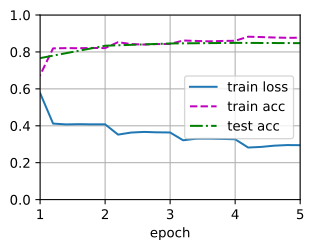
d2l.train_ch13(net, train_iter, test_iter, loss, trainer, num_epochs, devices)
loss 0.295, train acc 0.877, test acc 0.848
2845.4 examples/sec on [device(type='cuda', index=0), device(type='cuda', index=1)]
lr, num_epochs = 0.01, 5
trainer = gluon.Trainer(net.collect_params(), 'adam', {'learning_rate': lr})
loss = gluon.loss.SoftmaxCrossEntropyLoss()
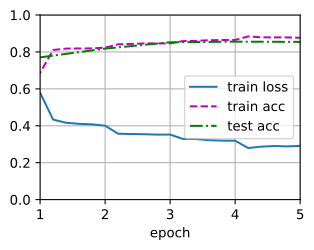
d2l.train_ch13(net, train_iter, test_iter, loss, trainer, num_epochs, devices)
loss 0.291, train acc 0.877, test acc 0.854
747.8 examples/sec on [gpu(0), gpu(1)]
学習済みモデル net を用いて テキスト系列の感情を予測するために、
以下の関数を定義する。
#@save
def predict_sentiment(net, vocab, sequence):
    """Predict the sentiment of a text sequence."""
    sequence = torch.tensor(vocab[sequence.split()], device=d2l.try_gpu())
    label = torch.argmax(net(sequence.reshape(1, -1)), dim=1)
    return 'positive' if label == 1 else 'negative'
#@save
def predict_sentiment(net, vocab, sequence):
    """Predict the sentiment of a text sequence."""
    sequence = np.array(vocab[sequence.split()], ctx=d2l.try_gpu())
    label = np.argmax(net(sequence.reshape(1, -1)), axis=1)
    return 'positive' if label == 1 else 'negative'
最後に、学習済みモデルを使って 2 つの簡単な文の感情を予測してみよう。
predict_sentiment(net, vocab, 'this movie is so great')
'positive'
predict_sentiment(net, vocab, 'this movie is so bad')
'negative'
16.2.4. まとめ
事前学習済み単語ベクトルは、テキスト系列内の個々のトークンを表現できる。
双方向 RNN は、最初と最後の時間ステップでの隠れ状態の連結などによって、テキスト系列を表現できる。この単一のテキスト表現は、全結合層を用いてカテゴリへ変換できる。
16.2.5. 演習
エポック数を増やしてみよう。学習精度とテスト精度を改善できるか? 他のハイパーパラメータを調整した場合はどうだろうか?
300 次元 GloVe 埋め込みのような、より大きな事前学習済み単語ベクトルを使ってみよう。分類精度は向上するか?
spaCy のトークン化を使うことで分類精度を改善できるか? spaCy をインストールし(
pip install spacy)、英語パッケージをインストールする必要がある(python -m spacy download en)。コードでは、まず spaCy をインポートし(import spacy)、次に spaCy の英語パッケージを読み込みます(spacy_en = spacy.load('en'))。最後に、def tokenizer(text): return [tok.text for tok in spacy_en.tokenizer(text)]を定義して、元のtokenizer関数を置き換えよ。GloVe と spaCy ではフレーズトークンの形式が異なることに注意しよう。たとえば、フレーズトークン “new york” は、GloVe では “new-york” の形式であり、spaCy のトークン化後は “new york” の形式になる。